
Negative News Overload? How to Protect Your Mental Health Online

If you’ve felt more tense, irritable, or exhausted after scrolling the news or social media, you’re not alone. In a 24/7 media cycle, we’re swimming in hot takes, breaking banners, and viral outrage. It’s easy to mistake constant vigilance for being informed. The truth: your reactions are normal human responses to a world that often feels unpredictable, and you can protect your well-being without burying your head in the sand.
This guide explains why negative content hooks us, how overexposure strains our minds, relationships, and sleep, and what boundaries and media-literacy tools actually help.
What’s going on and why it’s hard to look away
Our brains have a natural negativity bias: we’re wired to scan for threat. Media ecosystems (from headline writers, editors, producers, talk-radio hosts, podcasters, YouTubers, TikTokers, bloggers, streamers, and newsletter writers to the algorithms, ad networks, and recommendation engines that boost them…yeah, all of that) leverage that wiring because outrage holds our attention, and yes, gets the clicks.
So, we keep watching, “doomscrolling” long past the point of usefulness, and our nervous systems stay revved. The result is predictable: more anxiety, fragmented focus, poorer sleep, and friction at home. None of this means you’re weak; it means you’re human. Think of media hygiene like hand-washing for your mind.
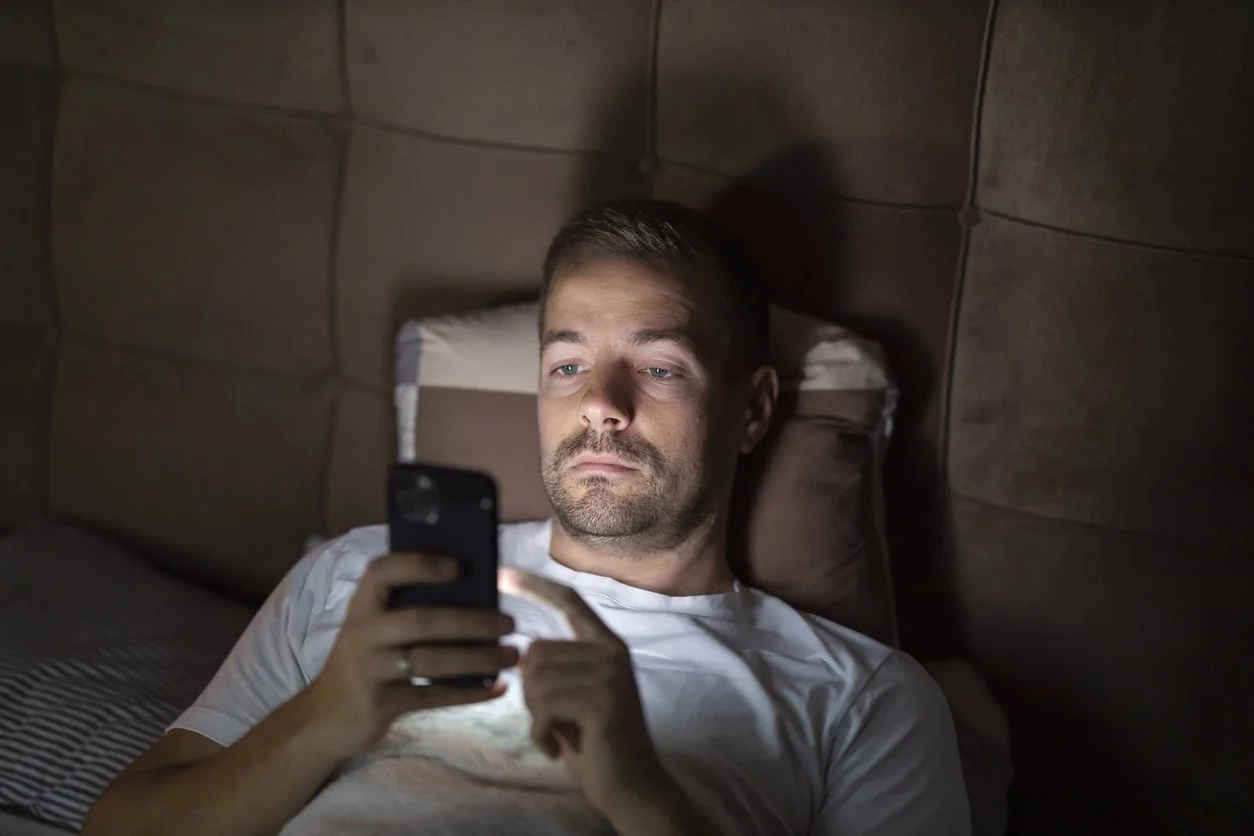
It also helps to name the tactic that fuels so much of our feed: FUD—fear, uncertainty, and doubt. FUD shows up as catastrophic headlines, conflicting “facts,” or the steady drumbeat that institutions, and sometimes even our neighbors, can’t be trusted. A quick self-check before reacting is powerful: Is this informing me or manipulating me?
The cost of overexposure
Prolonged exposure to distressing media isn’t just “annoying.” It takes a toll. Constant consumption ramps up the body’s stress response, increases worry, and can disrupt sleep, especially if screens sneak into late evening routines. Online arguments (and the tension they spill into our living rooms) create more heat than light, eroding connection rather than building understanding. Limiting exposure isn’t ignorance; it’s self-care.
Let’s dive in a little deeper.
Seven ways overexposure costs our mental health, relationships, and bodies
1. Cognitive overload & fatigue.
When alerts never stop and feeds never end, your brain never fully resets. Attention fragments, memory slips, and simple choices start to feel heavy. That’s decision fatigue not a character flaw.
2. Anxiety, stress, and low mood.
Negative stories and comparison loops wire the nervous system for threat. Doomscrolling promises certainty but delivers worry, rumination, and a lingering sense of helplessness.
3. Sleep and physical health.
Late-night screens delay melatonin and disrupt circadian rhythms. The result is lighter sleep, lower energy, and more muscle tension. Hours of sedentary scrolling also crowd out movement your body needs.
4. Relationship strain and isolation.
“Phubbing,” phone-snubbing, happens when we’re physically present but mentally with our screens. It looks like checking notifications mid-conversation, scrolling at the table, or keeping one eye on your phone while your partner or child is talking. The unintentional message is, “This device matters more than you right now.” Over time, those micro-moments erode trust, intimacy, and day-to-day warmth.

5. Misinformation and polarization.
Echo chambers and sensational content can heighten distrust of our government, political systems, and one another. The more we engage with outrage, the more the system serves us outrage, making balanced dialogue harder.
6. Compulsive use and loss of autonomy.
Many platforms are designed to capture attention through variable rewards. That design can train compulsive checking that feels addictive, crowding out hobbies, rest, and real connection.
7. Escalation risks.
Hostile, divisive content can normalize contempt and aggression. Over time, that climate spills into workplaces, homes, and communities.
Worth repeating: reducing exposure isn’t ignorance; it’s self-care. You’re not opting out of being informed; you’re opting into being well.
Reclaiming presence isn’t about perfection. It’s about choosing connection on purpose, one small moment at a time: look up, make eye contact, and come back to each other.
How to Spot FUD Before It Hijacks Your Day
Fear, uncertainty, and doubt, otherwise known as “FUD,” are the emotional levers that keep us clicking. You’ll see fear in catastrophe framing: headlines that insist the sky is falling, urgent countdowns, flashing banners. Fear tells your nervous system, “Don’t look away,” even when there’s nothing you can actually do in this moment.

Uncertainty shows up as a blizzard of contradictions: dueling “experts,” cherry-picked stats, and shifting narratives that leave you unsettled. The goal isn’t clarity. The goal is to keep you watching for the next “gotcha.” When our brains can’t resolve the conflict, anxiety fills the gap.
Doubt erodes trust; first in institutions, then in one another. Repetition of the most cynical interpretation becomes its own evidence, and soon we’re suspicious of any source that doesn’t match our feed. Doubt narrows our world and makes constructive conversation feel impossible.
A simple practice helps: Ask, “Is this meant to inform, or to inflame?” If you’re not sure, slow down. Step back from the screen, take two steady breaths, and check a second reputable source before you react or share. This isn’t about avoiding hard truths; it’s about protecting your attention so you can meet hard truths with a clear mind.
A 60-Second Verification Routine (that actually lowers anxiety)
Start by pausing. Notice your body: tight chest, quick breath, clenched jaw. Name what’s there: anger, fear, urgency. Two slow inhales and longer exhales tell your nervous system you’re safe enough to think clearly. Strong emotion is a cue to slow down, not speed up.

Next, look at the source. Who published this, and is it reporting or opinion? Is there an author, a date, and a visible corrections policy? Scan for original data or named experts you could actually trace back. If those basics are missing, treat the claim as unverified.
Then cross-check. Take the core statement and search it with at least one reputable outlet you trust. If only “fringe accounts” are carrying it or if the details don’t match, that’s a yellow flag. Aim for a second perspective that doesn’t always agree with your usual feed to prevent echo-chamber anxiety.
Finally, decide. If it’s still murky after a minute, save it and step away. Your mental health matters more than winning the internet today (and everyday). You can’t control the media environment, but you can control what you consume and how you respond, and that sense of agency is calming in itself. If you want a deeper reframe, see my piece on letting go to regain control.
A note on “fringe accounts” (and why they’re everyone’s problem)
No matter your politics, fringe accounts find their way into our feeds. They look confident and urgent, but they operate outside normal editorial standards—thin on transparency, big on emotion, and light on verifiable sources. The result is predictable: more anxiety, more division, and less clarity about what’s actually true.

Here are some common signs you’re looking at a fringe account:
Opaque identity. No real author name, organization, or contact info; bios are stuffed with slogans instead of credentials.
No standards page. You won’t find an “About,” corrections policy, or links to primary sources.
Sensational tone. Urgent language, ALL CAPS, emotional hooks, and one-sided framing designed to provoke, not inform.
Cherry-picked or missing evidence. Screenshots without context, cropped clips, stat dumps without links to datasets.
Reputation by tribe, not track record. “We tell the truth they won’t” in place of demonstrated accuracy over time.
Engagement hacks. Clickbait, outrage bait, monetized “hot takes,” or recycled rumors that spike shares but die on follow-up.
New or throwaway domains. Recently created sites with shifting names/handles after being flagged.
Quick self-check: Can I find a real person or organization behind this? Do they cite primary sources I can open? Have they issued corrections before? If the answer is “no” or “not sure,” treat their content as unverified and cross-check before you react or share. This isn’t about politics; it’s about protecting your attention and your peace (and those you care about if you are a serial sharer).
This isn’t about silencing viewpoints; it’s about protecting your attention. A quick way to stay grounded is to run that piece of content that has you ready to rally through the 60-second verification routine (see the section above): pause your body, check the source, cross-check the claim, and then decide whether it’s worth your energy.
A simple rule of thumb helps: if you can’t find a real person or organization behind the account, a corrections policy, and links to primary sources, don’t let it set your mood or your schedule. Save it, step away, and come back with a clear head. Your peace of mind is worth that minute.
Boundaries that work (and feel humane)
Think of boundaries as compassionate guardrails, not punishment, not perfection. They protect your focus, your sleep, and your relationships so you can show up with a clear head and a steady presence.
Create “news windows.”
Pick one or two times a day to check headlines and hold the rest of the day for living. Skip news 60–90 minutes before bed so your nervous system can downshift. You’ll wake up less wired and more able to choose what matters.Use timers and app limits.
Give your future self a hand by setting caps for social apps. Intentional, time-boxed sessions beat a hundred micro-checks that fray your attention. When the timer chimes, that’s kindness to yourself, not restriction.Curate your feed.
Unfollow accounts that spike anxiety or reward outrage. Mute threads that pull you into performative arguing. Choose voices that inform without inflaming; your brain learns what you teach it to expect.Relational boundaries.
Agree with friends and family about when and how to discuss hot-button topics. If a conversation only raises blood pressure, press pause and protect connection over “winning.” You can resume when both of you can listen.Device-free pockets.
Make small sacred spaces: meals, story time, date night, the first/last 30 minutes of the day. Put the phone in another room and let presence do its quiet work. Tiny rituals, repeated, build big change.Workplace guardrails.
Batch notifications and turn off nonessential badges during deep work. Your attention is a finite resource; budget it like money. Most things can wait 45 minutes while you focus on one meaningful task.When you slip (because you will).
Growth is cyclical, not linear. Name it: “I tuned out.” Repair it: “Sorry, I’m back,” and begin again. Each reset is a rep; you’re building a new habit, not proving your worth.
Swap doomscrolling for restoration

Boundaries create space. Fill that space with what refuels you. Walk outside without headphones. Journal for five minutes. Text a friend to meet for coffee. Move your body for ten minutes. These quiet choices lower background anxiety and make you more resilient when the next alert pings. If your community is navigating a crisis, pair restoration with gentle self-care basics; they’re not luxuries, they’re lifelines.
Bringing it all together
Media isn’t going away. Neither is your capacity to choose how you engage. When you can spot FUD, check claims quickly, and keep compassionate guardrails around your attention, you reclaim what matters: clarity, connection, and calm. If media stress is weighing on you or creating friction in your relationship let’s talk. I am happy to offer you a free, 15-minutes consultation that can help us decide together if working with me is a good fit for what you need right now. You don’t have to do this alone.